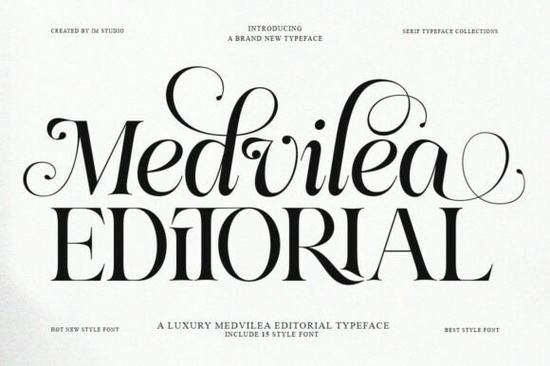
If you need a serif typeface that handles tight headlines and spacious layouts without breaking your grid, the Medvilea Editorial Font offers a practical solution. Designed for creatives who require polished typography across multiple formats, this collection bridges traditional elegance and modern layout requirements. Having a cohesive family ready for Illustrator, Affinity, or Canva saves valuable setup time.
What specific features make this typeface suitable for premium branding?
The core strength lies in balanced contrast and controlled curve endings. Rather than heavy stress, the letterforms use subtle thickness shifts that stay legible at smaller sizes. This works well with minimalist imagery or clean photography. The family includes full upper and lower cases, plus extensive character sets covering most Western and European languages. Standard ligatures, fractions, and proper punctuation align with publishing norms. Checking how glyphs interact with your style guide early prevents formatting conflicts later.
How do the fifteen included weights and widths function in practice?
The variations focus on measurable adjustments to space rather than redundant styles. Regular and Italic pairs handle everyday hierarchy. Condensed and Semi-Condensed versions keep letters aligned without overlapping. Expanded and Semi-Expanded options prevent crowded sightlines while keeping text readable. Italic variants add emphasis without shifting the baseline. Mixing these widths within a single layout creates visual depth similar to boutique fashion lookbooks. Comparing this family against complementary serif collections or heavier weight alternatives available at curated serif directories or bolder alternative sets helps you build a complete asset library. Exploring the full scope of display typography archives further clarifies how these widths pair across different mediums.
Which production stages benefit from narrow versus wide serif layouts?
Print-on-demand sellers often face spacing limits on apparel tags, coasters, or folded packaging. Narrow profiles like Extra-Condensed solve alignment issues while keeping vector proportions intact. Digital creators prefer wider cuts for website headers where screen space allows generous tracking. The extended ranges also streamline magazine covers, since headlines span columns before moving to body text. Multilingual support speeds up seasonal campaigns by allowing quick translation overlays without breaking kerning pairs. Testing your chosen width at final output size stops unexpected whitespace after prepress conversion.
What should I check before loading these files into design software?
Match the file format to your host application, since some suites prefer OTF while others run smoother with TTF. Open the specimen PDF first to verify glyph availability and test special characters like currency symbols or diacritics. Build a grayscale mockup to confirm contrast ratios before adding effects. Keep headline text on a separate layer so width swaps do not require redrawing vectors. Scale elements manually above two hundred percent to preserve crisp corners. Run a spell-check through your editor to catch accents that automatic detection sometimes misses.
How can I merge these letterforms into current brand systems without clashing?
Map your primary colors against a neutral background to set baseline contrast. Place your logo beside the widest and narrowest versions to judge horizontal balance. Adjust tracking in tens to avoid micro-kerning artifacts during export. Keep vertical line spacing consistent when switching between upright and slanted variants. Save favorite configurations as preset templates for faster repeat work. Many creators preview sample sheets and verify usage rights at platforms featuring Medvilea Editorial Font.
- Confirm commercial license terms before distributing final assets
- Extract files into a dedicated folder named after the project
- Load three primary widths into your active workspace
- Open a test document matching your final print or export dimensions
Sticking to this routine cuts revision time and keeps your typography consistent from screen to press.
Learn More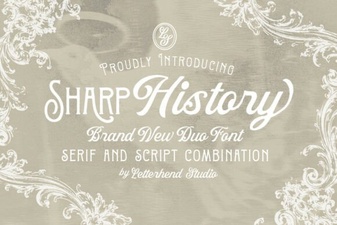 Sharp History Font: Design Concepts & Usage Guide
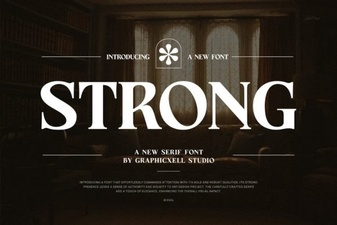 Choosing the Right Strong Font for Your Design
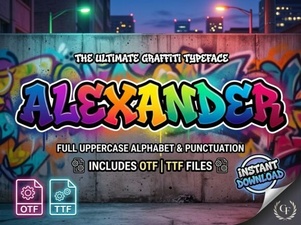 Download the Alexander Font for Your Creative Projects
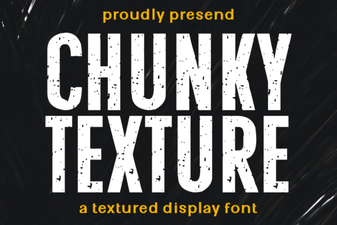 Chunky Text Fonts for Bold Design Statements
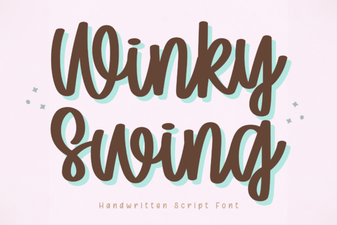 Creative Projects Using the Winky Swing Font
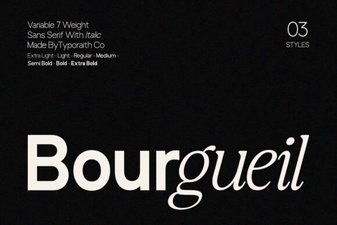 The Bourgueil Font: Design & Project Inspiration